
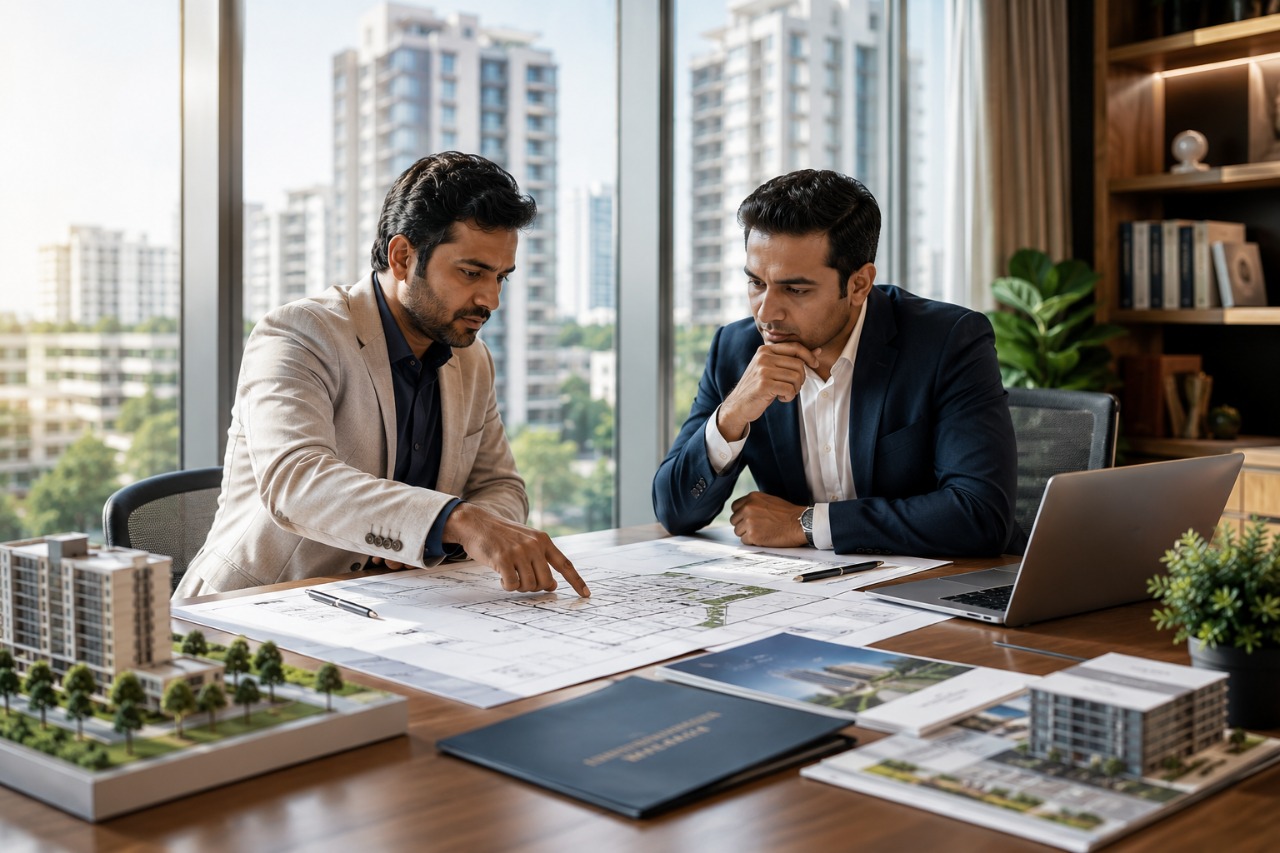
8 Questions to Ask Real Estate Development Firms Before Investing
Beyond Four Walls: Top 15 Amenities Every Modern Residential Project Should Offer Before You Invest
Buying a residential plot is one of the biggest financial decisions most people make. While location and budget remain important, today's buyers expect much more than a piece of land. They look for communities that provide convenience, safety, sustainability, and long-term value.
Modern residential property developers are no longer limited to roads and boundary walls. They are thoughtfully planned spaces designed to improve everyday living while increasing property appreciation over time.
Whether you're purchasing your first residential plot or expanding your investment portfolio, understanding the amenities offered by a project can help you make a smarter decision.
At DMG Real Estate, we believe that a well-planned residential project should enhance your lifestyle today while protecting your investment for tomorrow. This guide explores the 15 most important amenities that every modern residential development should offer and explains why they matter before you make your investment.
Why Amenities Matter More Than Ever
Today's property buyers are looking beyond square footage. They want neighbourhoods where children can play safely, families can enjoy green surroundings, and daily life becomes easier.
Projects with quality infrastructure and lifestyle-focused amenities generally attract more buyers, better resale demand, and stronger long-term appreciation than projects offering only basic plots.
A thoughtfully designed residential community also creates a better quality of life by combining security, convenience, recreation, and sustainable planning.
1. Wide Internal Roads and Well-Planned Infrastructure
The first thing buyers notice after entering a residential project is its infrastructure. Wide roads not only improve traffic movement but also create a sense of openness and premium living.
Proper drainage systems, underground utilities, organised parking spaces, and clearly marked roads contribute significantly to a project's long-term appeal.
Communities with strong infrastructure generally require less maintenance in the future and remain attractive to future buyers.
2. Round-the-Clock Security and Smart Surveillance
Safety remains one of the biggest priorities for every family.
Modern residential communities should include:
- Gated entry
- CCTV surveillance
- Visitor management
- Security guards
- Smart access control
- Emergency response systems
These features create peace of mind while also increasing buyer confidence in the project.
3. Landscaped Gardens and Open Green Spaces
Green spaces improve both physical and mental well-being.
Research consistently shows that communities with parks and landscaped areas offer healthier environments and stronger long-term desirability. They also help reduce urban heat while encouraging outdoor activities.
Open green areas make neighbourhoods more attractive to families with children as well as senior citizens.
4. Children's Play Area
Families often evaluate a residential community based on how suitable it is for children.
A dedicated play zone encourages outdoor activity, social interaction, and physical development while providing parents with a safe environment for their children.
Modern playgrounds should include:
- Swings
- Slides
- Climbing structures
- Rubber safety flooring
- Seating for parents
- Shade trees
5. Clubhouse and Community Centre
A clubhouse has become one of the most desirable lifestyle amenities.
It serves as the social heart of the community where residents celebrate festivals, organise events, conduct meetings, and build stronger neighbourhood relationships.
Facilities often include:
- Indoor games
- Multipurpose hall
- Gym
- Yoga studio
- Library
- Co-working spaces
These amenities significantly enhance the living experience.
6. Walking Tracks, Jogging Paths and Cycling Lanes
Health-conscious lifestyles have made dedicated walking and jogging tracks an essential feature rather than a luxury.
Well-designed pathways encourage residents of all ages to remain active without leaving the community.
These spaces also improve interaction among neighbours while promoting a healthier lifestyle.
7. Reliable Water Supply and Modern Drainage System
A beautiful township can quickly lose its appeal without dependable utilities.
Every quality residential project should include:
- Continuous water supply
- Efficient drainage
- Underground pipelines
- Rainwater harvesting
- Water storage systems
Reliable infrastructure reduces maintenance costs while improving the overall living experience.
8 Questions Every Investor Should Ask Before Choosing a Real Estate Development Firm
Buying property is a major financial decision. Whether you are considering a residential project, a plot for future construction, or property for long-term appreciation, the developer behind that project matters almost as much as the property itself.
A well-planned development can offer better infrastructure, stronger usability and long-term value. But before investing, it is important to understand how the realtor developer operates, what has already been delivered, how the project is documented and what makes the location promising.
This is why investors should not make a decision based only on price, advertisements or attractive project images.
Instead, ask the right questions.
If you are comparing real estate development firms, here are eight questions that can help you evaluate a company and its project more carefully.
1. What Is Your Track Record With Completed Real Estate Projects?
One of the first things an investor should investigate is the developer's experience.
But experience should not simply mean the number of years a company has existed. What matters more is what the company has actually developed during that time.
Ask:
- Which projects has the company completed?
- Where are those projects located?
- What type of properties has it developed?
- Were previous projects delivered as planned?
- Can you visit completed developments?
- What do existing buyers say about their experience?
A company's completed projects can provide useful insight into its ability to plan, execute and manage developments.
For example, DMG Estate states that it has been operating since 1992 and currently showcases developments including DMG Sai Dham City, Garg Estate, DMG Bhakti Avenue and DMG City Kshipra. Its portfolio includes residential developments and plotting opportunities.
This is the kind of information investors should investigate with any developer.
Why does track record matter?
Because a property is not simply a product that appears on the market. Development involves land, approvals, planning, infrastructure, construction and eventually handover. A history of completed projects gives investors more information about how a company has handled those responsibilities.
2. How Clear Are the Project's Approvals and Documentation?
A property may look attractive, but documentation is one of the most important parts of due diligence.
Before investing, ask the developer to explain the project's applicable approvals, registrations and legal documentation.
Depending on the project, this may include:
- Land ownership documents
- Title-related records
- Development permissions
- Approved plans
- RERA registration, where applicable
- Layout approvals
- Infrastructure-related permissions
- Other statutory approvals
Do not simply ask whether a project is "approved."
Ask what has been approved, by whom and whether the documents can be independently verified.
DMG Estate states on its website that its projects undergo legal scrutiny and that it focuses on transparent documentation.
For an investor, however, the best practice is still to independently verify important documents and obtain professional legal advice for a significant transaction.
Why is documentation so important?
Because the value of a property is not determined only by its location or construction.
Ownership, approvals, development rights and legal status can materially affect the security and usability of an investment.
3. How Does the Project Fit Into My Investment Goal?
Not every property is suitable for every investor.
Someone looking for a home may prioritize schools, hospitals, daily convenience and community infrastructure.
An investor looking for long-term appreciation may focus more heavily on:
- Location growth
- Infrastructure development
- Connectivity
- Demand
- Future development
- Supply in the surrounding area
- Resale potential
A plot investor may have a different objective altogether.
Before choosing a project, ask yourself:
Why am I buying this property?
Is it for:
- Self-use?
- Rental income?
- Long-term appreciation?
- Future construction?
- Portfolio diversification?
- A combination of these objectives?
The answer can change which property makes sense.
This is one reason investors should not simply ask, "Which project is the best?"
A better question is:
"Which project is best suited to my objective, budget and investment horizon?"
4. How Strong Is the Location Today and Where Could It Be Tomorrow?
"Good location" is one of the most common phrases in property marketing.
But investors should go deeper.
A strong location is not just about being close to a main road. It is about the combination of current infrastructure, accessibility, economic activity, surrounding development and future demand.
When evaluating a location, examine:
- Connectivity: Roads, highways and transport access
- Employment: Nearby industrial and commercial areas
- Social infrastructure: Schools, hospitals and retail
- Utilities: Water, electricity, drainage and other services
- Surrounding development: Existing and upcoming development
- Demand: Buyer and tenant interest
- Future infrastructure: Planned roads and connectivity improvements
- Competition: Similar developments nearby
For projects around Dewas, this type of analysis becomes particularly relevant because investors need to understand how individual locations connect with the wider city and surrounding economic activity.
DMG Estate currently lists projects at locations including A.B. Road/Tonkkala, Prestige College Road, Bilawali/Maksi Road and Kshipra.
How should you evaluate a location?
Visit the site yourself.
Check the surroundings during different times of the day. Look at actual road access, nearby development, neighborhood activity and essential services.
A map can tell you distance.
A site visit can tell you what the location actually feels like.
5. Who Is Responsible for Developing and Delivering the Project?
Real estate projects can involve multiple parties.
There may be landowners, developers, architects, contractors, consultants, financial partners and sales teams.
An investor should understand who is ultimately responsible for the project.
Ask:
- Who owns the land?
- Who is the developer?
- Who is responsible for construction?
- Who manages approvals?
- Who handles customer communication?
- Who is responsible for post-possession support?
This question becomes especially important when comparing different property developers.
A transparent development company should be able to explain its role and responsibilities clearly.
What should investors look for?
Look for consistency.
The company name, project information, documentation and communication should make it reasonably clear who is responsible for what.
If basic questions about ownership or development responsibility are difficult to answer, that is a reason to investigate further.
6. What Is the Expected Development and Possession Timeline?
Time plays an important role in real estate investment.
If you are purchasing an under-development property, a delay can affect your plans, financing costs, rental expectations or intended exit timeline.
Instead of asking only:
"When will I get possession?"
ask:
- What stage is the project currently at?
- Which development activities are already complete?
- What remains to be completed?
- What is the expected timeline?
- What factors could cause delays?
- What infrastructure will be available at possession?
For plotted developments, investors should also understand the timeline for roads, utilities, drainage, landscaping and other promised infrastructure.
Why does this matter?
Because a property investment is not only about the final asset.
It is also about when that asset becomes usable.
A realistic timeline is more useful than an overly optimistic promise.
7. What Will My Exit Options Look Like in the Future?
Many investors focus heavily on buying.
Experienced investors also think about selling.
Circumstances can change. You may eventually need to sell because of a new investment opportunity, relocation, financial requirements or a change in your long-term plans.
Before investing, ask:
- Who is likely to buy this property from me later?
- Is there demand for similar properties?
- What factors could influence resale value?
- Is the property suitable for rental?
- Are there any transfer-related conditions or charges?
- How developed is the surrounding area likely to become?
There is no guaranteed resale price or appreciation rate.
Instead of asking a developer to promise a future return, ask them to explain the fundamentals supporting future demand.
That creates a much more useful investment conversation.
8. What Makes This Project Different From Other Developers' Projects?
This may be the most revealing question you can ask.
Suppose you are comparing three projects with similar prices.
Ask each developer:
"Why should I choose your project instead of the alternatives available in the same market?"
A meaningful answer should be based on specific factors—not just words such as "premium," "luxury" or "high returns."
Look for differences such as:
- Location
- Project planning
- Infrastructure
- Development quality
- Connectivity
- Plot layout
- Residential planning
- Community features
- Developer track record
- Documentation
- Long-term usability
DMG Estate describes its approach around integrity, quality development, customer commitment, transparency and long-term vision.
Those are useful qualities to look for when evaluating any developer.
But investors should always compare claims against actual project information and independent due diligence.
What Should Investors Look for in Property Developers?
The best development company is not necessarily the one making the biggest promise.
Instead, look for a company that can provide evidence.
- Experience: Look at completed projects rather than only company claims.
- Transparency: Important information should be explained clearly.
- Documentation: Project and property documents should be available for appropriate verification.
- Location Understanding: The developer should be able to explain why the location works beyond simply saying it is "prime."
- Development Quality: Look at actual completed work whenever possible.
- Customer Commitment: The relationship should not end immediately after the sale.
DMG Estate states that its focus includes customer commitment, transparent communication and long-term value creation.
Why Asking "How, When and Why" Can Improve Your Property Decision
Instead of asking only what a developer is offering, ask three additional questions:
- How? How will this project create value? Understand the development, location, infrastructure and demand.
- When? When will the promised benefits actually become available? Understand construction, infrastructure and possession timelines.
- Why? Why should this property perform better than the alternatives? Look for evidence rather than assumptions.
This simple framework can turn a sales conversation into a proper investment discussion.
Frequently Asked Questions
1. What amenities should I prioritise before buying a residential plot?
Before investing in a residential plot, look beyond the plot size and price. Prioritise projects that offer essential infrastructure such as wide internal roads, 24/7 security, reliable water supply, proper drainage, landscaped gardens, children's play areas, street lighting, and recreational facilities. These amenities improve daily living and contribute to higher property appreciation over time. A well-planned community is often a better long-term investment than a project that only offers basic infrastructure.
2. Why are amenities important in a residential project?
Amenities directly impact your lifestyle, convenience, and future property value. Modern buyers prefer communities that offer safety, green spaces, fitness facilities, and social infrastructure. Projects with quality amenities also tend to attract more buyers, making them easier to sell or rent in the future. Choosing a project with thoughtfully planned amenities helps ensure a comfortable living environment while protecting your investment.
3. How do I choose the right residential project for my family?
Start by evaluating the project's location, legal approvals, infrastructure, and available amenities. Check whether the development has proper road connectivity, water supply, drainage systems, security measures, and open green spaces. It is also advisable to review the developer's track record, completed projects, and customer feedback. Visiting the site personally can help you assess construction quality and overall planning before making a decision.
4. Why is Dewas becoming a preferred destination for residential property investment?
Dewas real estate has witnessed growing interest due to improving infrastructure, industrial development, excellent connectivity, and increasing demand for residential communities. The city's strategic location near Indore and expanding employment opportunities make it attractive for both homebuyers and investors. As new townships continue to develop, buyers have access to better-planned residential projects with modern lifestyle amenities and strong future appreciation potential.
5. How can I identify a reliable real estate developer before investing?
A residential property developers in dewas demonstrates transparency, timely project delivery, quality construction, and compliance with legal regulations. Look for developers with completed projects, positive customer reviews, and clear documentation. Visiting completed developments can provide valuable insight into construction standards and maintenance quality. Working with experienced professionals like DMG Real Estate also helps buyers evaluate projects based on location, infrastructure, investment potential, and long-term value rather than price alone.
6. What should I ask a real estate development firm before investing?
Ask about the company's completed projects, legal documentation, approvals, location fundamentals, construction progress, expected timelines, project costs and future resale potential. You should also understand who owns the land and who is responsible for developing and delivering the project. The goal is to understand both the opportunity and the potential risks before investing.
7. How can I evaluate whether a property developer is trustworthy?
Start by reviewing its completed projects and actual development history. Visit completed properties when possible and investigate customer experiences. Then review the project's documentation, approvals and ownership structure. A trustworthy developer should be willing to answer specific questions clearly instead of relying only on marketing claims.
8. Why is the location important when choosing a property developer?
Location influences accessibility, demand, usability and the potential for future development. Investors should examine current infrastructure, connectivity, employment opportunities, social infrastructure and surrounding development. However, future infrastructure should not automatically be treated as guaranteed appreciation. Verify planned developments independently wherever possible.
9. When should I consult a property lawyer before buying?
For a significant property purchase, consulting an independent property lawyer before signing important documents can be a sensible step. This is particularly useful for land, plotted developments, under-construction properties or transactions involving complicated ownership or development structures. A lawyer can independently review documents and identify issues that a buyer may overlook.
10. Is buying directly from a real estate developer better than buying resale property?
Neither option is automatically better. Buying from a developer can provide access to newer infrastructure, planned developments and early-stage opportunities. A resale property, meanwhile, may provide an opportunity to inspect an already-developed property and its surrounding neighborhood. The better option depends on your budget, investment objective, timeline, location preference and risk tolerance.