
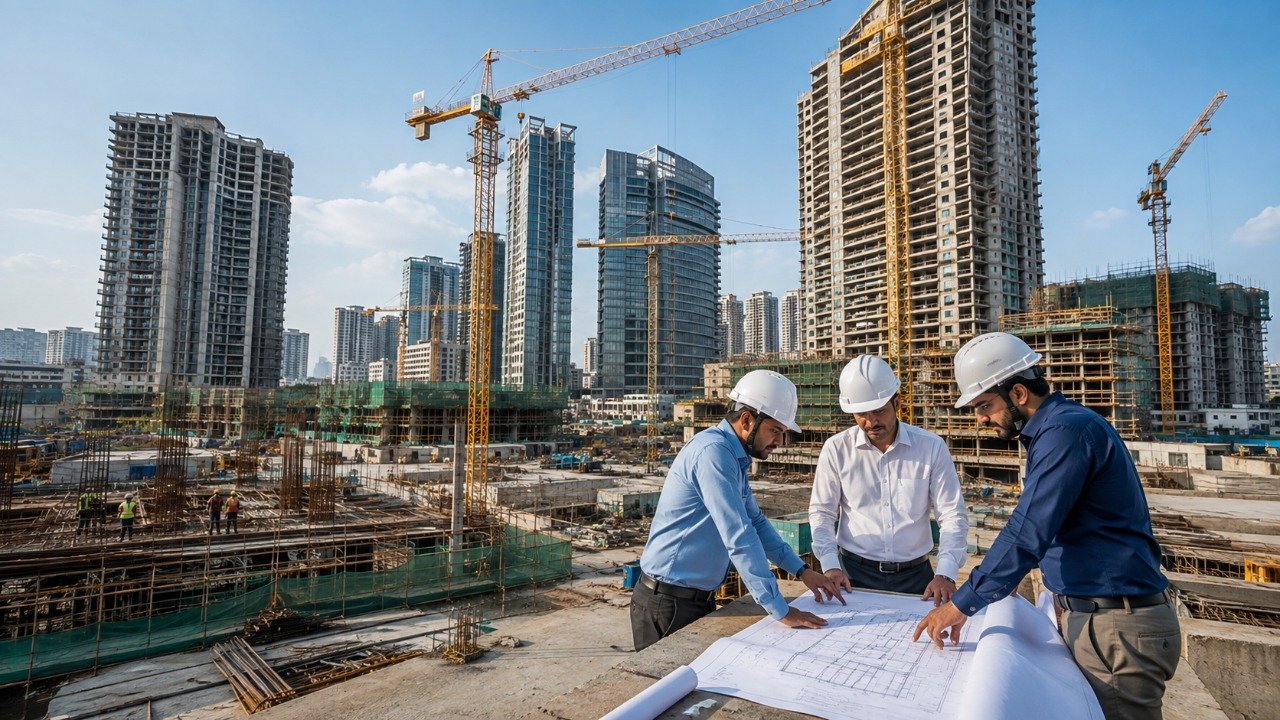
Real Estate Development Constructor: Role in Large-Scale Projects
How to Verify Costs and Credibility of a Residential Property Developer Before Buying
Buying a home is rarely a decision made overnight. You may spend weeks comparing locations, budgets, floor plans, amenities, and financing options. But there is another question that deserves just as much attention: Who is actually developing the property?
The reputation and track record of a developer can influence everything from construction quality and project execution to documentation, possession, and the long-term value of the property.
Whether you are purchasing your first home or considering a property as an investment, knowing how to verify a developer before making a commitment can help you make a more informed decision.
For buyers comparing residential property developers, the goal should not simply be to find the company making the biggest promises. It should be to find a developer whose claims can be independently checked.
Why Does the Credibility of a Residential Property Developer Matter?
A residential project is a long-term purchase. Unlike buying a consumer product, you may have to deal with the developer through several stages of the transaction and construction process.
A credible developer should be able to provide clear information about its projects, approvals, construction progress, contractual terms, and past work.
This is why residential real estate developers should be evaluated on more than brochures, advertisements, or attractive sample apartments.
A developer's credibility can give buyers a better understanding of:
- The company's experience in residential development
- Its record of completing previous projects
- The quality and consistency of completed developments
- Transparency in documentation and communication
- Project approvals and registrations
- Construction and delivery practices
- The experience of previous customers
- The company's ability to maintain projects after completion
The important question is not simply, "Is this developer popular?"
A better question is: Can the developer's claims be verified?
1. Start With the Developer's Track Record
One of the simplest ways to evaluate a developer is to study what they have already built.
Do not limit your research to the company's current project. Look at previous developments and examine how those projects performed over time.
Check:
- How many residential projects has the developer completed?
- How long has the company been operating?
- Are completed projects actually occupied?
- Were projects delivered on or around their promised timelines?
- What type of properties has the company developed?
- Does the developer have experience in the same market?
- Are previous projects still maintained properly?
How Can Previous Projects Reveal a Developer's Reliability?
Completed projects provide something that advertisements cannot: evidence of execution.
If possible, visit an older development personally. Look at the condition of common areas, landscaping, parking, security, lifts, and other shared facilities.
You can also speak with residents.
Ask practical questions such as:
- Was possession smooth?
- How was communication during construction?
- Were promised amenities delivered?
- How were complaints handled?
- Were there significant delays?
- How is the maintenance of the property today?
These conversations can reveal aspects of a developer's performance that may not appear in a sales brochure.
2. Verify the Project's Registration and Approvals
Before purchasing a property, buyers should independently verify the project's regulatory information rather than relying solely on sales representatives.
For projects covered by India's real estate regulatory framework, check the relevant RERA registration and project information applicable to the state.
Review the information available for the project, including:
- Project registration details
- Promoter/developer information
- Approved project details
- Development timelines
- Project status
- Available disclosures and filings
- Details relating to the development and associated entities where available
Why Is Independent Verification Important?
A brochure is a marketing document. Regulatory records and official project documents serve a different purpose.
If information presented to you by a sales team differs from official records, ask for clarification before proceeding.
Do not assume that a minor discrepancy is automatically harmless. Ask the developer to explain it and, where necessary, obtain professional legal advice.
3. Examine the Developer's Legal and Documentation Practices
Property transactions involve significant documentation. A credible developer should be willing to explain the documents associated with the project and the transaction.
Depending on the project and transaction, buyers may need to review documents relating to:
- Title and ownership
- Development rights
- Project approvals
- Sanctions and permissions
- RERA registration
- Sale agreement
- Payment schedule
- Possession terms
- Maintenance responsibilities
- Cancellation and refund provisions
- Specifications and promised amenities
What Should You Do Before Signing?
Do not sign an agreement simply because the salesperson says it is a standard document.
Read the terms carefully.
If the purchase represents a significant financial commitment, consider having the agreement and relevant property documents reviewed by an independent property lawyer.
This is particularly important when you are unsure about ownership, development rights, timelines, penalties, or other contractual conditions.
4. Compare Promises With What Has Actually Been Delivered
This is one of the most useful checks when evaluating residential property developers.
Developers often highlight features such as landscaped gardens, clubhouses, sports facilities, security systems, community spaces, and premium specifications.
Instead of asking only what is promised, ask:
What has the developer actually delivered in previous projects?
Visit completed developments and compare the original promises with the current property.
For example, if a developer promotes extensive landscaping, look at an older project.
If the company highlights premium construction specifications, examine the quality and condition of completed buildings.
This approach gives you a more realistic understanding of execution.
5. Speak to Existing Homeowners
Online reviews can be helpful, but direct conversations with residents can provide much more context.
When visiting an existing project, try to speak with several residents rather than relying on one opinion.
Ask about:
- Construction quality
- Possession experience
- Customer service
- Maintenance
- Water and electricity arrangements
- Common-area upkeep
- Defect resolution
- Society or association management
- Overall satisfaction
Why Talk to More Than One Resident?
Every property will have both positive and negative experiences.
One unhappy review does not necessarily make a developer unreliable. Similarly, one positive testimonial does not prove that everything went perfectly.
Look for patterns.
If several independent homeowners mention the same issue, it deserves further investigation.
6. Research the Company's Reputation Beyond Its Website
A developer's website is useful for understanding its official positioning, but it should not be your only source of information.
Search for the company and its projects across multiple independent sources.
Look for:
- Established news coverage
- Project-related announcements
- Industry recognition
- Customer discussions
- Local property forums
- Public regulatory information
- Previous project information
- Relevant legal or regulatory developments
Be careful with both extremely positive and extremely negative claims.
How Do You Separate Useful Reviews From Noise?
Look for reviews that provide specific details.
A useful review might explain what happened, when it happened, and how the developer responded.
A vague comment such as "best developer ever" or "worst company" gives you very little information.
The objective is not to find a developer with zero negative feedback. That is unrealistic.
The objective is to understand how consistently the developer performs and how it responds when problems occur.
7. Check the Company's Financial and Business Stability
Large residential developments require significant capital, planning, and execution capability.
While buyers may not have access to every aspect of a private company's finances, they can still look for indicators of business stability.
Consider:
- How long the company has operated
- The number of completed projects
- The number of ongoing developments
- Whether projects appear to be progressing consistently
- Whether there are repeated reports of stalled developments
- The developer's established presence in the market
- Relevant corporate or regulatory information that is publicly available
This does not mean that a newer developer is automatically unreliable.
A new company may have experienced professionals, strong financial backing, or a reputable parent organisation.
The point is to understand who is behind the project and whether the development appears to have credible execution capacity.
8. Evaluate Construction Quality, Not Just the Sample Flat
A beautifully designed sample apartment can create a strong first impression.
But a sample apartment is not necessarily a complete representation of how the finished development will perform.
Whenever possible, visit a completed project by the same developer.
Look at:
- External finishes
- Flooring
- Doors and windows
- Plumbing
- Electrical installations
- Lifts
- Staircases
- Parking
- Waterproofing indicators
- Common areas
- Landscaping
- Building maintenance
Why Does This Matter?
Construction quality becomes much easier to evaluate after a building has been occupied for some time.
You can see how materials have aged and whether common facilities are being maintained properly.
This is particularly useful when comparing several residential real estate developers offering properties at similar prices.
9. Understand the Developer's Communication Style
Credibility is not only about construction.
It is also about communication.
Pay attention to how the developer or sales team responds when you ask difficult questions.
A trustworthy sales process should allow you to ask about:
- Delays
- Documentation
- Charges
- Possession
- Specifications
- Cancellation terms
- Maintenance
- Project changes
- Approvals
What Are Warning Signs?
Be cautious if you experience:
- Pressure to make an immediate payment
- Vague answers to straightforward questions
- Reluctance to share documents
- Contradictory information from different representatives
- Promises that are not reflected in written documents
- Pressure to sign without sufficient time for review
A good sales experience cannot guarantee a good project, but a lack of transparency is certainly worth investigating.
10. Compare Developers Using Evidence, Not Just Price
Price is important, but it should not be the only comparison point.
Two projects with similar prices may differ considerably in location, construction quality, delivery record, amenities, documentation, and long-term maintenance.
A simple comparison framework can help.
| Factor | Developer A | Developer B | Developer C |
|---|---|---|---|
| Years of experience | Check | Check | Check |
| Completed projects | Check | Check | Check |
| Previous delivery record | Check | Check | Check |
| Regulatory/project information | Verify | Verify | Verify |
| Construction quality | Visit | Visit | Visit |
| Resident feedback | Research | Research | Research |
| Documentation transparency | Evaluate | Evaluate | Evaluate |
| Customer service | Evaluate | Evaluate | Evaluate |
| Project location | Compare | Compare | Compare |
| Long-term maintenance | Check | Check | Check |
This makes the decision more objective.
A Simple Developer Credibility Scorecard
You can also create a basic scorecard before making your final decision.
| Evaluation Area | Suggested Weight |
|---|---|
| Track record | 20% |
| Project documentation & transparency | 20% |
| Construction quality | 15% |
| Delivery history | 15% |
| Customer feedback | 10% |
| Financial/business stability | 10% |
| Communication & service | 10% |
| Total | 100% |
The percentages are not a universal industry standard. They are simply a practical framework for comparing developers consistently.
The most important point is to base your score on evidence rather than marketing claims.
A Practical 7-Step Checklist Before Booking
Before paying a booking amount, work through this sequence:
- Research the developer: Understand its history, completed projects, and market presence.
- Visit an older project: See how the developer's work has performed after occupation.
- Speak to residents: Ask about possession, quality, maintenance, and customer service.
- Verify project information independently: Check relevant regulatory and official records.
- Review the documents: Do not rely on verbal assurances.
- Compare competing projects: Evaluate more than price and amenities.
- Take independent professional advice where necessary: A property lawyer or other qualified professional can help identify issues that a buyer may overlook.
What Makes a Residential Property Developer Trustworthy?
There is no single certificate that can tell you whether a developer is "good."
Credibility is built through a combination of evidence.
A trustworthy developer generally demonstrates:
- A verifiable project history
- Transparent documentation
- Consistent execution
- Clear communication
- A track record that can be independently assessed
- Responsiveness to customer concerns
- Projects that match their stated specifications
- Willingness to provide relevant information
In other words, trust should be earned through evidence, not created through advertising.
How DMG Real Estate Approaches Residential Development
For a buyer, the most useful way to evaluate a property company is to look beyond promotional messaging and understand the thinking behind its projects.
DMG Real Estate focuses on developing residential real estate opportunities with attention to location, planning, buyer requirements, and long-term value.
When evaluating any residential development, buyers should still conduct their own due diligence, review project-specific documentation, and verify information through appropriate official sources.
The same principle applies whether you are considering DMG Real Estate or comparing it with other developers: look at the evidence, understand the documents, and make a decision based on the complete picture.
Final Thoughts
Choosing between residential property developers is ultimately about more than selecting a floor plan or comparing prices.
You are choosing a company whose decisions can affect your property purchase for years.
That is why knowing how to verify a developer's credibility, when to investigate further, and why independent due diligence matters can make the buying process considerably more informed.
Look at completed projects. Talk to homeowners. Verify regulatory information. Review documents. Compare actual delivery with promised specifications. And never allow sales pressure to replace proper due diligence.
A property may look perfect on paper, but the developer behind it deserves the same level of scrutiny as the property itself.
The Role of a Real Estate Development Constructor in Large-Scale Projects
Large-scale real estate projects are rarely completed by a single team working in isolation. A successful development requires coordination between developers, architects, engineers, contractors, consultants, vendors, authorities, and multiple project stakeholders.
This is where a real estate development constructor can play an important role.
A development constructor helps translate a project's vision and technical plans into a coordinated construction process. From planning and scheduling to execution, quality control, safety, and handover, the constructor can influence how efficiently a large development moves from concept to completion.
For developers and investors, understanding this role is particularly important when comparing real estate firms, selecting development partners, or evaluating real estate developers for a major project.
In this guide, we explore what a real estate development constructor does, how the role fits into the development lifecycle, why coordination matters, and what developers should consider before appointing one.
What Is a Real Estate Development Constructor?
A real estate development constructor is a construction-focused professional or organization involved in turning the approved design and development plan into a physical asset.
Depending on the project structure, the constructor may be responsible for coordinating construction activities, subcontractors, materials, site operations, quality requirements, safety procedures, timelines, and project documentation.
The exact scope varies from project to project.
A residential development, commercial complex, industrial facility, mixed-use development, and infrastructure-linked project can each require a different construction approach.
A capable constructor therefore needs more than construction manpower. The role requires planning, coordination, technical understanding, resource management, and the ability to respond to problems that emerge during execution.
For example: a project may have an excellent architectural design, but delays in procurement, poor contractor coordination, unexpected site conditions, or inadequate sequencing can still affect the final outcome.
This is why construction execution deserves attention from the beginning rather than being treated as a final-stage activity.
Why Is the Constructor Important in Large-Scale Real Estate Development?
Large developments involve hundreds or sometimes thousands of individual activities.
Structural work may depend on engineering approvals. Electrical installations may depend on civil progress. Mechanical systems may need coordination with architectural finishes. Procurement schedules need to match construction milestones.
One delay can therefore affect several downstream activities.
A constructor's role is to help coordinate these moving parts.
The value is particularly visible in areas such as:
- Construction planning
- Resource allocation
- Contractor coordination
- Procurement scheduling
- Quality management
- Site supervision
- Safety management
- Cost monitoring
- Construction scheduling
- Testing and commissioning
- Project documentation
- Final handover
The objective is not simply to build faster.
The objective is to build safely, correctly, efficiently, and according to the project's requirements.
What Are the Main Responsibilities of a Real Estate Development Constructor?
The responsibilities can vary according to the project agreement, but several areas are common across major developments.
1. Construction Planning
Before major physical work begins, the constructor needs a practical execution plan.
This can include construction sequencing, labour requirements, equipment planning, material requirements, work packages, site logistics, milestones, quality checkpoints, and safety procedures. A good construction plan identifies dependencies early.
2. Coordinating Contractors and Subcontractors
Large developments typically involve multiple specialist teams, including structural contractors, electrical contractors, plumbing teams, HVAC specialists, façade contractors, flooring teams, fire-safety specialists, interior contractors, and landscaping teams. The constructor helps establish sequencing and communication between these teams to prevent interference.
3. Managing Materials and Resources
Construction progress depends heavily on having the right materials and equipment available at the right time. A constructor coordinates material schedules, supplier deliveries, storage, equipment requirements, labour deployment, and logistics to reduce disruption and waste.
How Does Construction Quality Affect a Real Estate Project?
Quality is not something that should be checked only at the end—it needs to be managed throughout construction.
Early identification of defects is generally more practical than discovering problems after subsequent work has covered them. A constructor can establish inspection procedures, documentation, testing requirements, and corrective-action processes according to the project's specifications.
How Can a Constructor Help Manage Construction Delays?
Delays can happen due to weather, approvals, design changes, supply issues, labour availability, unexpected site conditions, or contractor performance.
A practical response involves identifying the delayed activity, determining if it affects the critical path, understanding the cause, re-sequencing activities where practical, and updating the project schedule to turn delay management into an ongoing, active process.
Why Is Communication Important in Large-Scale Construction?
Communication is often underestimated in construction management. A design revision or procurement change that does not reach the site team can result in costly rework. Effective construction management requires structured communication between the developer, project management team, architects, engineers, contractors, suppliers, and consultants.
Real Estate Firm vs Real Estate Developer vs Constructor
- Real estate firm: A broad term referring to a company operating in one or more areas of the real estate industry.
- Real estate developer: Takes responsibility for creating and developing a property project, including land, feasibility, financing, approvals, design, marketing, and delivery.
- Constructor: Primarily concerned with the physical execution and construction management of the development.
How to Choose the Right Construction Partner for a Large Project
Choosing a construction partner should involve more than comparing quotations. Important evaluation areas include relevant project experience, project management capability, quality systems, safety culture, resource management, communication, and track record.
How Technology Is Changing Construction Management
Modern construction increasingly relies on digital tools to improve visibility and coordination, including Building Information Modelling (BIM), digital project management platforms, drone monitoring, cloud documentation, and data-driven scheduling.
Conclusion: The Constructor Is a Critical Part of Project Delivery
Large-scale real estate development requires much more than a strong concept and attractive design. The project must ultimately be constructed safely, efficiently, and according to the required specifications.
For developers comparing real estate firms or evaluating potential construction partners, the most useful approach is to look beyond marketing claims and examine experience, technical capability, quality systems, safety practices, and evidence from previous work.
Frequently Asked Questions
1. What is a real estate development constructor?
A real estate development constructor is a construction-focused organization or professional responsible for coordinating and executing the physical construction of a real estate project. Depending on the contract, responsibilities can include planning, contractor coordination, procurement, quality control, safety, scheduling, site management, testing, and handover.
2. What is the difference between a real estate developer and a constructor?
A real estate developer generally takes responsibility for developing the project as a whole, including aspects such as feasibility, land, financing, approvals, design strategy, and commercial objectives. A constructor focuses primarily on delivering the physical construction. In some business models, one company may perform both roles.
3. How do you choose a construction partner for a large real estate project?
Start by assessing relevant experience, technical capability, project management systems, quality procedures, safety performance, resource capacity, communication practices, references, and previous projects. The most suitable partner should match the specific requirements and complexity of the proposed development.
4. Why is construction planning important in large-scale projects?
Construction planning helps establish the sequence of activities, resource requirements, procurement needs, site logistics, milestones, dependencies, and quality checkpoints. Good planning can help teams identify potential conflicts and delays earlier and coordinate multiple contractors more effectively.
5. What makes a real estate development project successful?
Successful projects generally depend on several factors working together: realistic planning, sound design, effective project management, appropriate financing, regulatory compliance, quality construction, safety, efficient resource management, stakeholder coordination, and disciplined execution. No single factor guarantees success.