From Industrial to Residential Growth: How Dewas Is Changing | DMG Estate
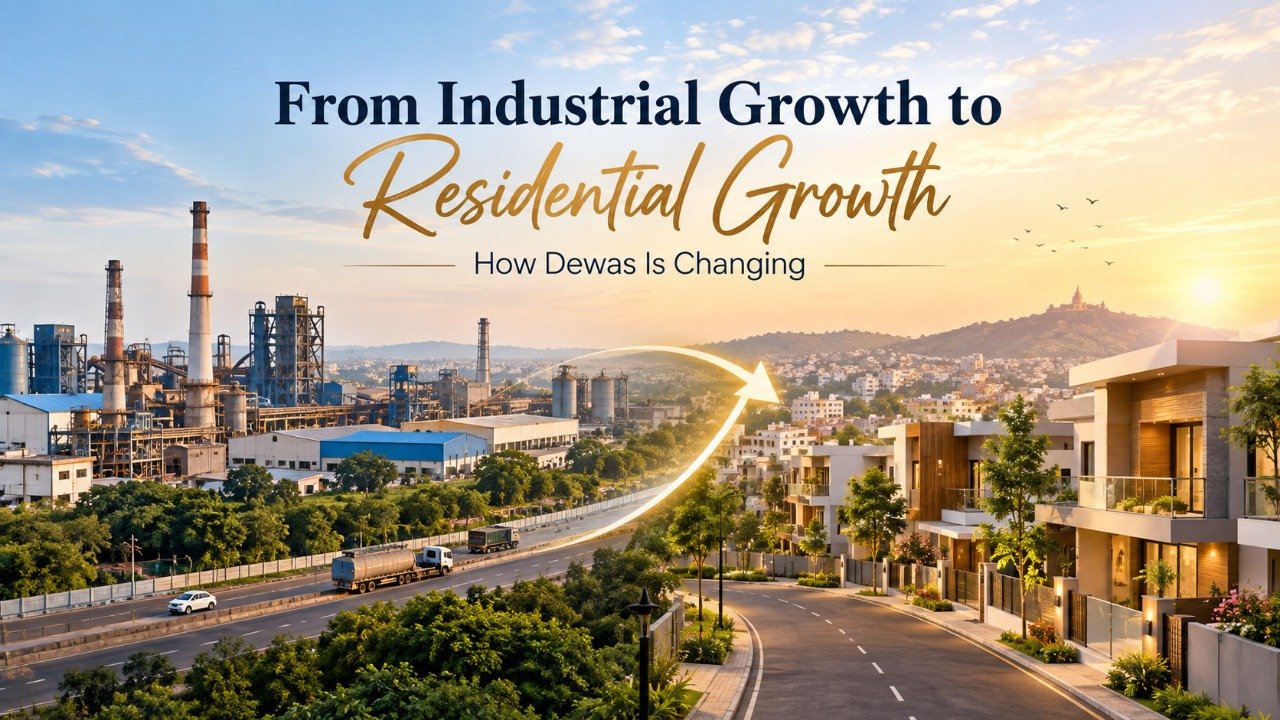
From Factories to Family Homes: How Dewas Is Entering a New Phase of Growth
Dewas has long been recognised for its industrial identity. Over the years, factories, manufacturing units, employment opportunities and its strategic location have played an important role in shaping the city's economy.
But the character of Dewas is gradually becoming broader.
Today, the city is not only an industrial centre. It is also seeing growing interest in residential development, planned communities, plots and modern housing options. As employment, infrastructure and connectivity evolve, the way people look at Dewas is changing too.
The important question is not simply whether Dewas is growing, but how this growth is influencing where people live, what they expect from a home and how residential development should respond to the city's future.
For homebuyers, investors and property developers, understanding this transition can provide a better perspective on the Dewas real estate market.
Dewas: A City Built on Industrial Strength
Dewas already had an economic foundation that many emerging residential markets have to develop from scratch.
The district administration describes modern industry as having expanded significantly in Dewas, with industrial activity contributing to local employment. Agriculture and industries connected with soybean processing also form part of the district's economic base.
This industrial base has an important connection with housing.
When industries create employment, they also create demand for the ecosystem around employment:
- Housing for employees and families
- Rental accommodation
- Retail stores
- Restaurants and daily-use services
- Schools and educational facilities
- Healthcare services
- Transportation
- Recreational spaces
- Commercial establishments
This does not mean industrial development automatically increases property prices everywhere. Instead, it creates potential residential demand, which then depends on location, connectivity, infrastructure, employment patterns and the quality of development.
That distinction is important when evaluating any growing city.
How Industrial Growth Is Influencing Residential Development in Dewas
The relationship between industry and housing is often gradual.
A new industrial unit does not immediately create a residential neighbourhood. Over time, however, employment opportunities can bring more people into an area, increase movement between nearby cities and strengthen demand for housing that is convenient for everyday life.
Dewas benefits from its relationship with surrounding economic centres as well.
According to the district administration, Dewas has road and rail connectivity, while its proximity to Indore adds another dimension to its regional accessibility.
For residents, this means that choosing a home is increasingly connected to questions such as:
- How long will my daily commute take?
- How easily can I reach schools, workplaces and healthcare?
- What infrastructure exists around the property today?
- What is officially planned for the surrounding area?
These questions are becoming increasingly important as residential development expands.
Why Connectivity Matters in Dewas's Residential Growth
A property's address is only one part of its location.
What matters just as much is how that location connects with the rest of the city and surrounding areas.
Dewas's position in western Madhya Pradesh gives it connectivity with important neighbouring centres. The district administration identifies road and railway connections as important elements of the city's accessibility.
For residential buyers, connectivity can influence everyday convenience.
A well-connected residential location can make it easier to:
- Travel to work
- Access schools and colleges
- Reach hospitals
- Visit markets
- Connect with nearby cities
- Access public and private transportation
- Maintain a practical daily routine
However, buyers should avoid looking at connectivity only through a map.
A road shown on a project brochure is not enough. It is worth visiting the location personally, understanding actual travel routes and checking what infrastructure is already operational.
This is one reason developers and builders need to consider more than just land availability when planning new residential communities.
From Industrial Land to Livable Communities
As a city expands, residential development also changes.
Earlier, the primary requirement may have been simply a house or a plot. Modern homebuyers often expect something more complete.
They may look for:
- Proper internal roads
- Drainage and water infrastructure
- Open and green areas
- Security
- Children's spaces
- Convenient access
- Community planning
- Quality construction
- Documentation transparency
This represents an important shift in the role of a developer.
A residential project is no longer simply about constructing individual structures. It is about creating an environment where people can realistically live, move, interact and build their future.
That is where planned development becomes particularly relevant for a growing city such as Dewas.
How Changing Buyer Expectations Are Shaping Dewas Real Estate
Homebuyers today tend to research a property more carefully before making a decision.
Price remains important, but it is rarely the only consideration.
A family purchasing a home may also ask:
- How is the neighbourhood developing?
- Why is this location suitable for our lifestyle?
- When will surrounding infrastructure become operational?
- What facilities are available nearby?
- How reliable is the developer?
- Is the project properly documented and approved?
These questions have changed the conversation around residential property.
The focus is moving from simply buying space to understanding the overall living environment.
This is particularly relevant in developing markets because today's open land can gradually become tomorrow's neighbourhood.
The Role of Developers and Builders in Dewas's Next Phase
The transition from an industrial city to a more diversified urban environment requires thoughtful planning.
Developers and builders have an important role in this process because the quality of new development can influence how a locality functions in the long term.
A responsible development approach considers:
1. Location
The location should be evaluated based on present accessibility as well as the surrounding development pattern.
2. Infrastructure
Roads, drainage, water supply, electricity and other essential infrastructure should be considered before purchasing.
3. Layout Planning
A well-planned layout can improve accessibility, movement and the overall usability of a residential community.
4. Open Spaces
Green areas and community spaces can contribute to a more comfortable residential environment.
5. Construction Quality
The quality of materials, workmanship and execution directly influences the long-term experience of residents.
6. Documentation
Buyers should understand the project's approvals, ownership documents, applicable RERA registration and other relevant paperwork before making a purchase.
7. Long-Term Thinking
Good development should respond not only to today's requirements but also to how the surrounding area may evolve.
This is where choosing an experienced real estate constructor or development partner becomes relevant for buyers looking beyond the initial purchase.
How Dewas's Growth Could Create New Residential Opportunities
Dewas's growth should be viewed as a combination of several factors rather than a single trend.
The district administration's long-term planning framework and existing economic base provide context for understanding this transition. The city's industrial activity, road and railway connectivity and relationship with nearby economic centres are all relevant when studying its residential future.
At the same time, buyers should remember that growth does not happen uniformly.
One locality may develop faster than another. One road corridor may become more active while another remains relatively low-density. Planned infrastructure may also take time to materialise.
Therefore, the best approach is to evaluate specific locations and projects, rather than assuming that every property in Dewas will perform in the same way.
When Should Homebuyers Start Looking at Developing Areas?
There is no universal answer to when someone should purchase property.
The right timing depends on the buyer's purpose, budget, financing position, intended holding period and the specific project.
For someone planning to live in the property, immediate factors such as:
- Access to work
- Schools
- Healthcare
- Daily necessities
- Existing roads
- Water and electricity
- Neighbourhood development
may be more important than a distant future projection.
For a long-term investor, officially planned infrastructure, development patterns and the potential for future demand may deserve greater attention.
In either case, buyers should distinguish between existing infrastructure, officially planned development and unverified future claims.
Why the Developer Matters as Much as the Location
A promising location alone does not guarantee a successful property purchase.
Execution matters.
The developer is responsible for translating a plan into an actual project. That involves planning, construction coordination, infrastructure, documentation, timelines and customer communication.
This is why buyers should research the company behind a project before making a commitment.
Look at:
- Previous projects
- Delivery history
- Project approvals
- RERA registration where applicable
- Construction standards
- Documentation
- Site development
- Customer support
- Transparency in communication
A buyer should never select a property solely because a company describes itself as a top real estate company. Instead, examine the evidence behind the claim completed projects, documentation, execution quality and customer experience.
DMG Estate: Developing With Dewas's Growth in Mind
DMG Estate is a real estate developer and property consultant based in Dewas, with a portfolio covering residential and other development opportunities.
According to the company's official website, DMG Estate focuses on planned development, infrastructure readiness, transparency, customer commitment and long-term value. Its current project portfolio includes DMG Sai Dham City, Garg Estate, DMG Bhakti Avenue and DMG City Kshipra across locations in and around Dewas.
The company also states that it has more than 30 years of legacy and more than 20 delivered projects across Dewas, and highlights RERA-registered developments and documentation assistance as part of its buyer-focused approach.
Buyers can also learn more about the company's approach through the About DMG Estate page.
The objective should not simply be to find a property. It should be to understand how the project fits into the broader development of its location.
What Dewas's Transformation Means for Homebuyers
Dewas's story is no longer limited to factories and industrial activity.
The city's economic base, connectivity and expanding urban environment are contributing to a broader residential conversation.
But responsible property decisions require more than assuming that growth will automatically translate into higher property values.
A better approach is to ask:
- What is driving development in this particular location?
- What infrastructure exists today?
- What is officially planned?
- How accessible is the property?
- Who is developing it?
- What documentation is available?
- Does the project suit my long-term needs?
These questions help turn a general idea of "Dewas growth" into a practical property evaluation.
The city's next phase will ultimately be shaped not just by how much it grows, but by how thoughtfully that growth is planned.
For homebuyers, that makes the quality of the location, project and development partner increasingly important.
Frequently Asked Questions
1. Why is Dewas experiencing growing residential development?
Dewas has an established industrial base, employment opportunities and road and railway connectivity. As economic activity develops, housing and supporting services can also experience increased demand. The district administration identifies modern industry and employment generation as important parts of Dewas's economic development. However, residential growth does not happen equally across the entire city. Buyers should evaluate the specific location, infrastructure, accessibility and development status of an individual project.
2. How does industrial growth affect residential property demand in Dewas?
Industrial growth can influence residential demand by creating employment and attracting workers, professionals and supporting businesses. This can increase the need for homes, rental accommodation, retail and other services. The effect depends on several factors, including where employment is concentrated, how easily people can commute and whether suitable residential infrastructure is available nearby. Therefore, industrial growth should be treated as one factor in evaluating residential demand rather than as a guarantee of property appreciation.
3. What should I check before buying a residential property in Dewas?
Before purchasing, examine the location, road access, infrastructure, surrounding development, project approvals, ownership documents, RERA registration where applicable, construction quality and the developer's track record. It is also advisable to visit the site rather than relying entirely on online information or promotional material. For larger purchases, buyers may also consider getting relevant legal and property documentation independently reviewed before making a final commitment.
4. How do I choose the right developers and builders for a property in Dewas?
Start by researching their completed projects and checking whether previous developments were delivered as represented. Review project documentation, applicable approvals, construction quality, customer communication and transparency. It is also useful to visit completed projects when possible. Seeing an existing development can provide a more practical understanding of planning, infrastructure and maintenance than promotional material alone. The objective should be to evaluate the developer using verifiable information rather than choosing solely on advertising claims.
5. Why is planned residential development important for Dewas?
Planned development can help create more organised residential environments with appropriate roads, infrastructure, open spaces, accessibility and community facilities. As Dewas expands, thoughtful planning can become increasingly important because residential growth affects more than individual properties. It also influences traffic, utilities, public spaces, local services and the overall character of neighbourhoods. For buyers, a well-planned development can therefore provide value beyond the individual house or plot it can contribute to a more functional and sustainable living environment.